
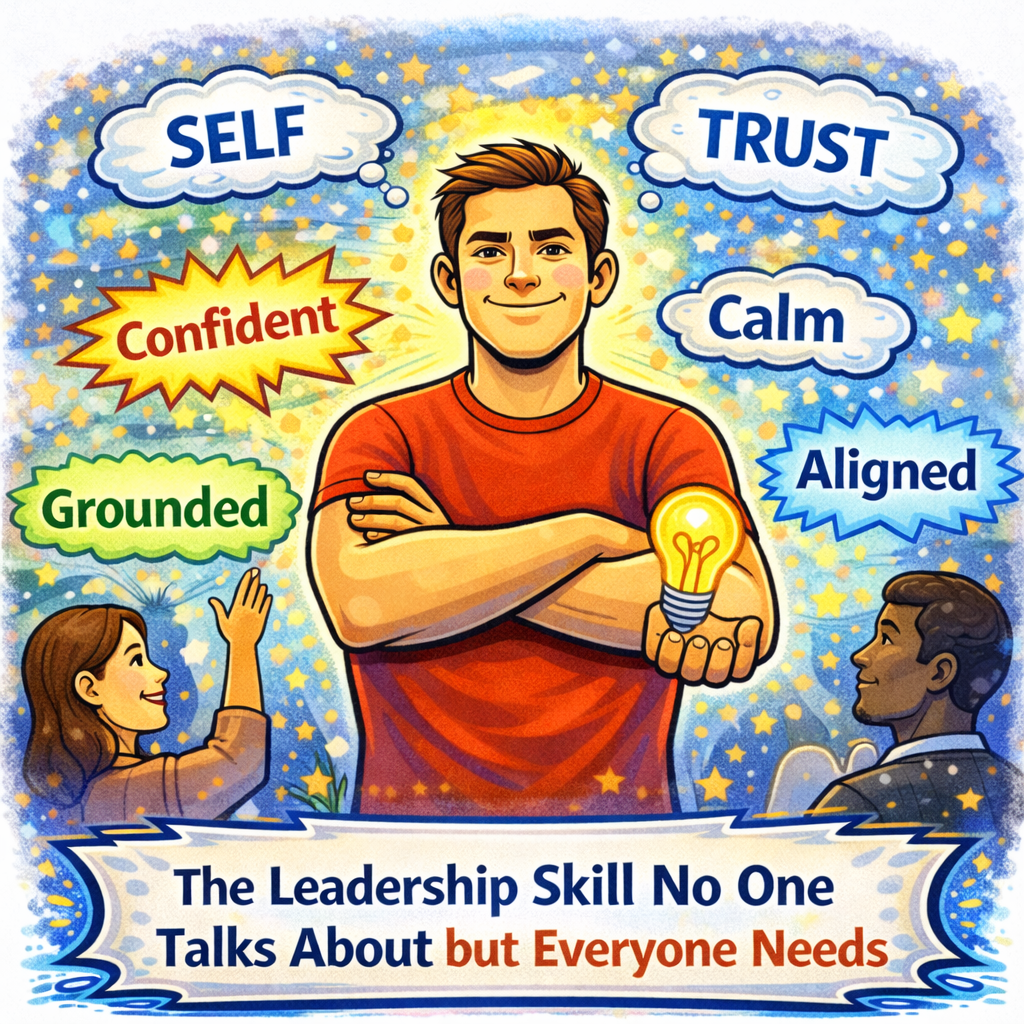
There is a skill that quietly determines whether a leader feels confident or constantly overwhelmed. It is rarely taught in school. It is not listed on resumes. Yet it shapes every decision you make. That skill is self trust.
Most leaders believe they struggle because they lack information or experience. In reality, many struggle because they second guess themselves. They replay conversations. They hesitate before making decisions. They look outward for approval instead of inward for clarity.
Self trust is the foundation of leadership. Without it, even the most capable professionals feel scattered and reactive. With it, leadership becomes grounded, calm, and consistent.
Leadership is not about having all the answers. It is about trusting yourself to move forward even when the answers are not obvious.
Self trust shows up in the quiet moments. The moment before you speak up in a meeting. The moment you decide whether to address an issue or let it slide. The moment you choose direction without certainty. Those moments define leadership more than any title ever will.
When self trust is weak, stress rises. Every decision feels heavy. You carry the fear of making the wrong choice instead of focusing on the next right step. Over time, this creates mental fatigue and emotional burnout.
Leaders without self trust often over explain. They delay action. They avoid hard conversations. These behaviors are not flaws. They are symptoms of internal doubt.
Strong leaders are not fearless. They are self trusting. They understand that mistakes are part of growth, not proof of failure.
Self trust does not mean you ignore feedback or stop learning. It means you can receive feedback without losing confidence. You stay open without becoming unstable. You listen without surrendering your authority.
When you trust yourself, your nervous system stays calmer under pressure. You respond instead of react. You lead instead of manage. Your team feels that stability and responds with confidence of their own.
People do not need perfect leaders. They need steady ones.
Self trust is built through action. Every time you follow through on a decision, your confidence grows. Every time you avoid a decision, doubt tightens its grip. Confidence is not something you wait for. It is something you earn through consistency.
Many high performers get stuck because they are waiting to feel ready. Readiness is not a feeling. It is a result of repetition.
Self trust also requires integrity with yourself. When you keep promises to yourself, even small ones, your belief strengthens. When you ignore your own boundaries or values, trust erodes.
Leadership is personal before it is professional. How you treat yourself determines how you lead others.
The leaders who thrive long term are not the loudest or the most charismatic. They are the ones who can stand in uncertainty without losing themselves. They trust their ability to adapt, learn, and move forward.
That is the leadership skill no one talks about, but everyone needs.
FAQs
What is self trust in leadership
Self trust is the confidence to make decisions, take responsibility, and adapt without constant self doubt.
Why do leaders struggle with self trust
Fear of failure, past mistakes, and relying too much on external validation weaken self trust over time.
How can I strengthen self trust
Start with small decisions. Follow through consistently. Reflect on lessons instead of mistakes alone.
Does self trust mean ignoring others
No. It allows you to listen without losing confidence or direction.
Final Takeaway
Leadership does not fail because you lack talent. It falters when you stop trusting yourself. Self trust is the anchor that keeps you steady when pressure rises and answers are unclear.
Build it daily. Protect it intentionally. Lead from it consistently.
Message call or email today to learn how to build habits that fuel your leadership and performance.
(314) 302 9223
thecoachabe@gmail.com
 The Coach Abe
Leave a comment