
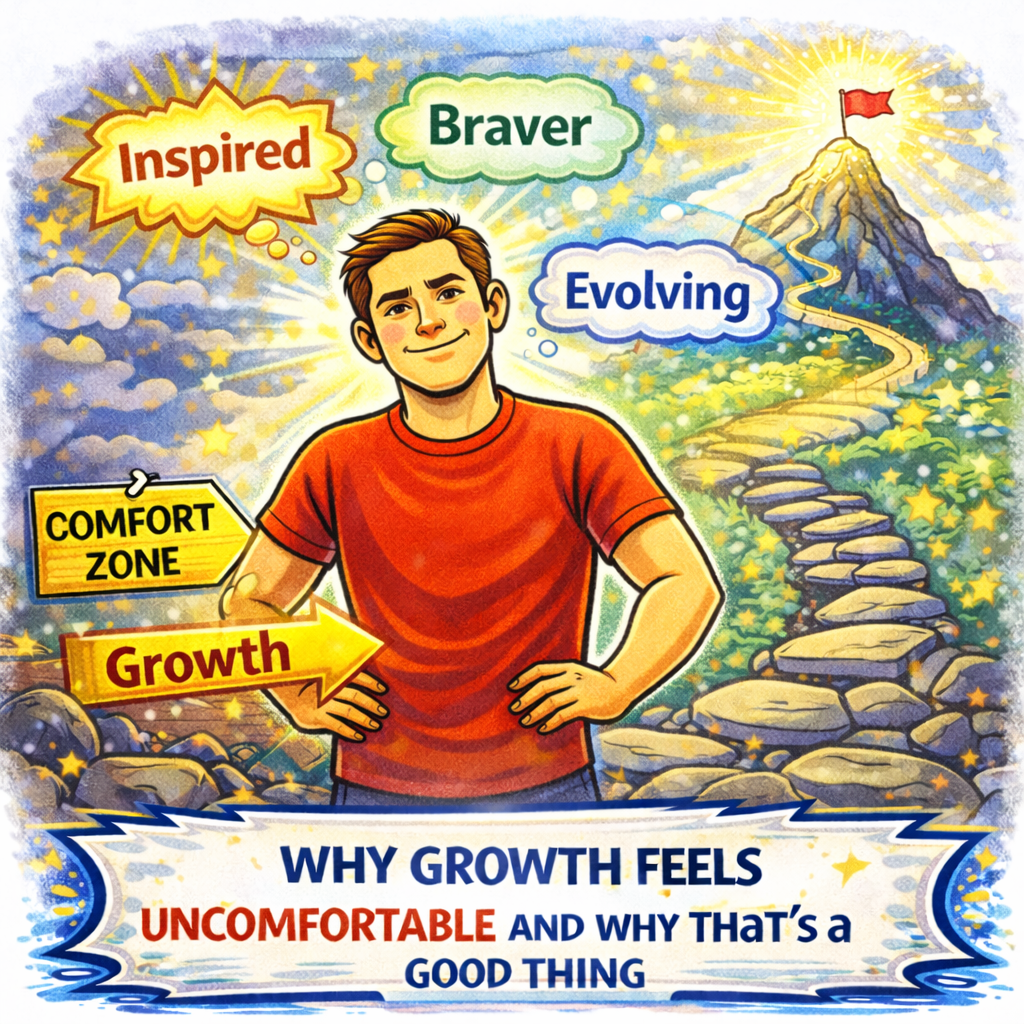
There is a moment in every professional journey when growth starts to feel heavy. You question yourself more. Progress feels slower. Confidence wobbles. Most people assume something is wrong. But that discomfort is not failure. It is growth doing its job.
Personal growth rarely feels clean or comfortable. It stretches you beyond habits that once felt safe. It asks you to think differently, act differently, and let go of old patterns that no longer serve you. That tension you feel is not a warning sign. It is proof that you are moving forward.
Growth does not happen when everything feels easy. It happens when your comfort zone gets challenged and your mind has to adapt.
Discomfort is not the enemy. Avoiding it is.
When growth begins, the brain resists. It prefers what is familiar even if familiar is limiting. That resistance shows up as doubt, procrastination, or the urge to pull back. Many professionals mistake this resistance for intuition. In reality, it is fear trying to protect the old version of you.
Growth demands change. Change demands effort. Effort demands energy.
This is why so many high performers feel stuck even though they are capable. They stay busy but avoid the uncomfortable work that creates real transformation.
Growth feels uncomfortable because it requires responsibility. Responsibility for your habits, your reactions, and your choices. When you grow, you stop blaming circumstances and start owning outcomes. That shift alone can feel overwhelming.
But it is also empowering.
Personal growth is not about becoming someone else. It is about becoming more of who you already are without the limitations that hold you back. That process is rarely smooth. It is filled with learning curves and moments of self doubt.
Discomfort is where clarity is built.
When you lean into discomfort instead of running from it, you develop resilience. You learn how to stay steady under pressure. You build confidence that does not depend on perfect conditions. That is real leadership.
Growth sharpens your awareness. You notice habits that drain you. You recognize patterns that keep repeating. You see where you have been playing small. This awareness can feel uncomfortable, but it is necessary.
You cannot grow without seeing the truth.
Avoiding discomfort keeps you comfortable but stagnant. Embracing it keeps you moving forward even when the path feels uncertain.
Growth also challenges your identity. The version of you that succeeded before may not be the version needed for the next level. Letting go of old success can feel just as uncomfortable as facing failure.
But growth asks a simple question
Are you willing to be uncomfortable now so you can be stronger later
Those who say yes build momentum. Those who say no stay stuck.
Discomfort teaches patience. It teaches focus. It teaches self trust. When you push through moments of uncertainty, you prove to yourself that you can adapt. That belief carries into every area of life and leadership.
The goal is not to eliminate discomfort. The goal is to build the capacity to handle it without losing confidence.
Growth does not require massive change overnight. It requires consistent action even when things feel awkward or unfamiliar. Small steps taken daily build strength faster than waiting for confidence to magically appear.
Confidence follows action. Not the other way around.
If growth feels uncomfortable right now, that means you are doing something right. You are stretching beyond old limits. You are creating space for a stronger version of yourself to emerge.
Stay with it.
FAQs
Why does personal growth feel stressful
Growth challenges habits and beliefs that once felt safe. The brain resists change even when the change is positive.
Is discomfort a sign I should stop
No. Discomfort usually means you are learning and adapting. Pain signals injury. Discomfort signals growth.
How long does the uncomfortable phase last
It depends on consistency. The more you lean into growth habits, the faster discomfort turns into confidence.
How do leaders use discomfort to grow
They treat discomfort as feedback, not failure, and use it to refine habits and decisions.
Final Takeaway
Growth will never feel comfortable at first. That does not mean you are on the wrong path. It means you are expanding beyond who you used to be. Discomfort is the price of progress and the gateway to confidence.
Lean into it. Stay consistent. Trust the process.
Message call or email today to learn how to build habits that fuel your leadership and performance.
(314) 302 9223
thecoachabe@gmail.com
 The Coach Abe
Leave a comment