
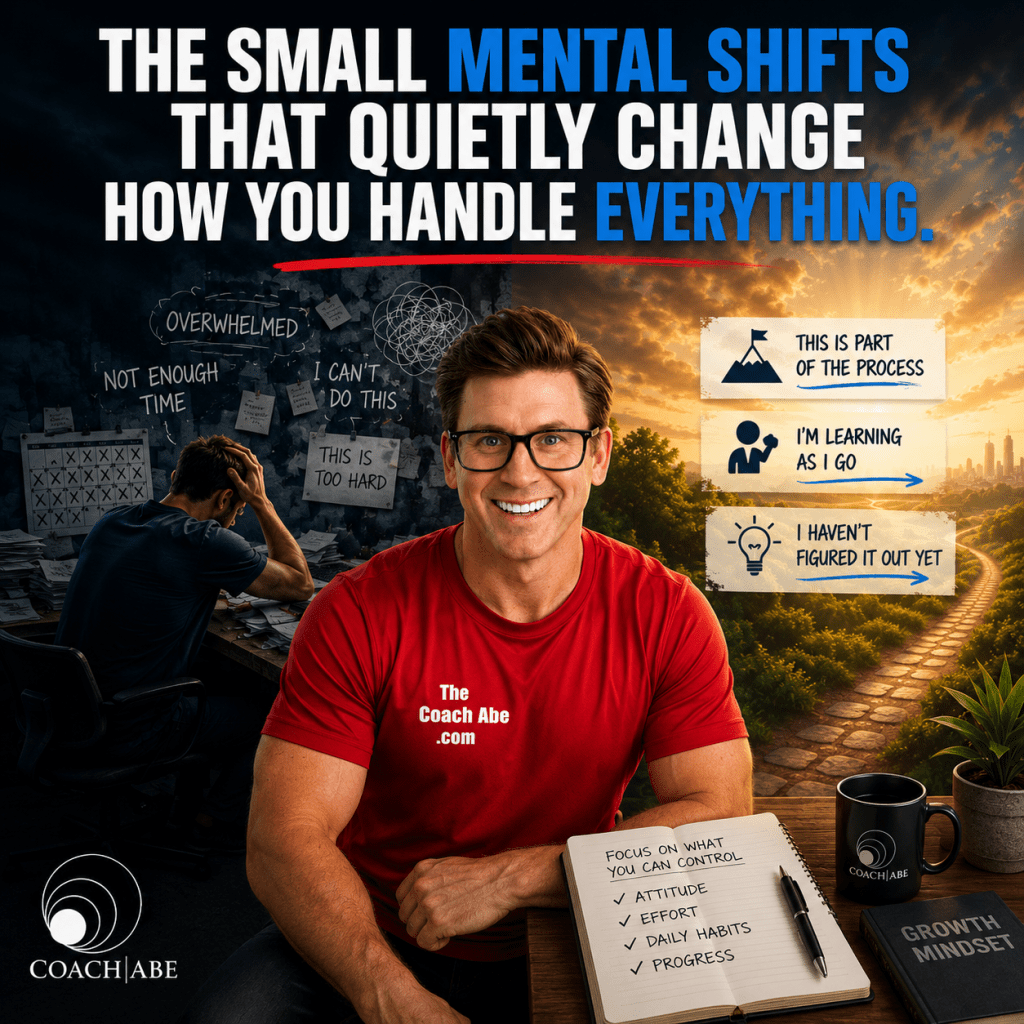
Most people look for big changes when they want different results.
A new plan
A better system
A stronger push
It feels like progress should come from something noticeable.
Something that feels different right away.
But lasting change rarely starts that way.
It usually begins with something much smaller.
A subtle shift in how you think.
Not loud. Not dramatic.
But consistent.
And over time, those small shifts begin to change how you handle everything.
What’s Actually Changing
The way you respond to situations is shaped by how you interpret them.
Something happens
You assign meaning
That meaning influences how you feel
And how you feel affects what you do next
Most people try to change the final step.
They focus on their actions.
But actions are a result.
If the interpretation stays the same, the response tends to follow the same pattern.
Small mental shifts happen at the level of interpretation.
That’s where the change begins.
Why Small Shifts Matter More Than Big Efforts
Big efforts can create temporary change.
You can push yourself to act differently for a period of time.
But if the underlying thinking doesn’t change, those efforts are hard to maintain.
Small shifts work differently.
They don’t rely on force.
They adjust how you see things.
And when your perspective changes, your response changes with less resistance.
You don’t have to push as hard.
You don’t have to convince yourself as much.
The change feels more natural.
The Shifts Most People Overlook
Mental shifts are often simple.
That’s why they’re easy to ignore.
For example:
From “This is a problem” to “This is part of the process”
From “I’m not ready” to “I’m learning as I go”
From “This isn’t working” to “I haven’t figured it out yet”
These are not dramatic changes.
But they adjust the meaning you give to the situation.
And that changes how you respond.
How These Shifts Affect Your Behavior
When your interpretation changes, your behavior follows.
You stay engaged longer
You become more flexible
You respond with less hesitation
The situation may stay the same.
But your approach to it changes.
And that difference compounds over time.
Small shifts repeated consistently create different patterns.
And different patterns create different results.
What Gets in the Way
Most people overlook small shifts because they don’t feel significant.
They’re easy to dismiss.
Or they’re replaced with the idea that bigger change is needed.
So instead of adjusting their thinking, people try to change everything at once.
A new routine
A new strategy
A complete reset
But without changing how situations are interpreted, those changes don’t last.
The same patterns return.
Just in a different form.
The Shift: Becoming Aware of Your Default Thinking
You don’t need to create new thoughts immediately.
You need to notice the ones you already have.
When something doesn’t go as planned, pause and ask:
“What meaning am I giving this right now?”
This question brings attention to the starting point.
Not the action.
The interpretation.
And that’s where small shifts can be made.
What You’ll Start to Notice
As you become more aware, patterns begin to stand out.
You may notice that:
You default to certain interpretations quickly
You respond similarly in different situations
You repeat the same internal phrases over time
And once you see that, something changes.
You realize that your responses are not fixed.
They’re shaped by how you think.
A More Effective Way to Apply Small Shifts
You don’t need to force a completely new perspective.
You can start by adjusting your current one slightly.
Instead of jumping to a positive thought, look for a more useful one.
A thought that keeps you engaged.
A thought that keeps you moving.
Something that feels possible, not forced.
That’s where small shifts become effective.
They don’t create resistance.
They create movement.
Final Thought
You don’t need a complete overhaul to change how you handle things.
You need small shifts in how you interpret what’s happening.
Because those shifts influence how you think, how you feel, and how you respond.
If your interpretations stay the same, your patterns tend to repeat.
But when those interpretations begin to change, even slightly, your responses begin to shift.
And over time, those small shifts quietly change everything.
Start with awareness. Use the worksheets to identify your default thinking, and begin making small adjustments one thought at a time.


Leave a Reply