
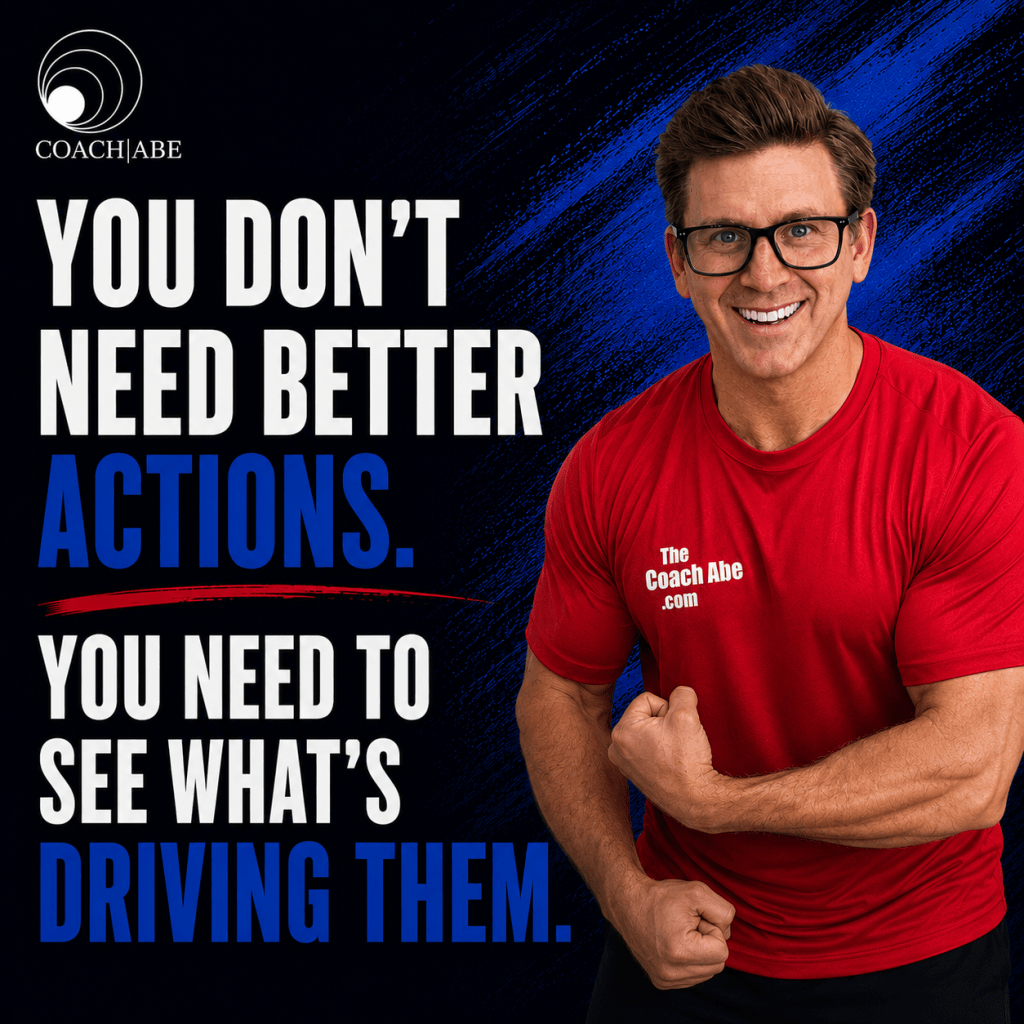
When results don’t go the way you expect, the first instinct is to adjust your actions.
Do more
Try harder
Be more consistent
Find a better strategy
It feels practical. If the outcome isn’t working, change what you’re doing.
But in many cases, the issue isn’t the action.
It’s what’s driving the action.
Because before you do anything, you’ve already interpreted the situation.
And that interpretation shapes how you show up.
What’s Actually Happening Before You Act
Every action starts with an internal response.
Something happens
You interpret it
That interpretation creates meaning
And that meaning influences what you do next
This process happens quickly.
So it feels like you’re responding directly to the situation.
But you’re not.
You’re responding to the meaning you’ve already assigned to it.
And that meaning determines the quality of your actions.
Why Actions Alone Don’t Create Consistent Results
You can take the same action in two different states and get different outcomes.
If your thinking is clear, your action feels focused.
If your thinking is uncertain, your action feels hesitant.
Even if the behavior looks the same on the surface, the execution changes.
You may:
Hold back slightly
Second-guess your decisions
Avoid fully committing
These small differences affect your results more than the action itself.
Which is why repeating the same action doesn’t always lead to improvement.
The Hidden Patterns Behind Your Behavior
Your actions are influenced by patterns you’ve developed over time.
These patterns are built from repeated thoughts, past experiences, and familiar responses.
So when a situation arises, your mind doesn’t start fresh.
It pulls from what it already knows.
That’s why you may notice:
Similar reactions in different situations
Repeated hesitation in moments that matter
Consistent outcomes despite trying new approaches
The action changes.
The pattern driving it doesn’t.
What Most People Try to Improve
Most people focus on fixing behavior.
They try to:
Be more disciplined
Stay motivated
Follow through consistently
But if the thinking underneath stays the same, those changes are difficult to maintain.
You can push yourself for a period of time.
But eventually, your default patterns take over.
And the same results return.
The Shift: Seeing What’s Driving Your Actions
The goal is not to immediately change what you do.
It’s to understand what’s influencing it.
When you notice a reaction, pause and ask:
“What led me to respond this way?”
This question shifts your attention.
Instead of focusing only on the action, you begin to see the thought behind it.
And that’s where change starts.
What You’ll Start to Notice
As you practice this, patterns become more visible.
You may notice that:
You hesitate after certain thoughts appear
You act differently depending on how you interpret a situation
You repeat similar responses in different environments
And once you see that, something becomes clear.
Your actions are not random.
They are guided.
And the guidance is coming from your thinking.
A More Effective Way to Change Behavior
Instead of trying to force better actions, start by acknowledging what’s driving them.
When a familiar response shows up, notice the thought behind it:
“That’s what usually leads me to react this way”
“That’s the pattern behind this action”
This creates awareness.
And awareness changes how much influence the pattern has.
You’re no longer acting on autopilot.
You’re seeing the process as it happens.
Final Thought
You don’t need better actions.
You need to see what’s driving the actions you’re already taking.
Because your results are shaped long before the action itself.
They are shaped by how you interpret, think, and respond internally.
If that part stays the same, your actions tend to produce similar outcomes.
But once you begin to see what’s behind your behavior, you create the opportunity to respond differently.
Not by forcing change.
But by understanding what’s been guiding you all along.
Start with awareness. Use the worksheets to identify what’s influencing your actions, and begin shifting your responses one thought at a time.


Leave a Reply